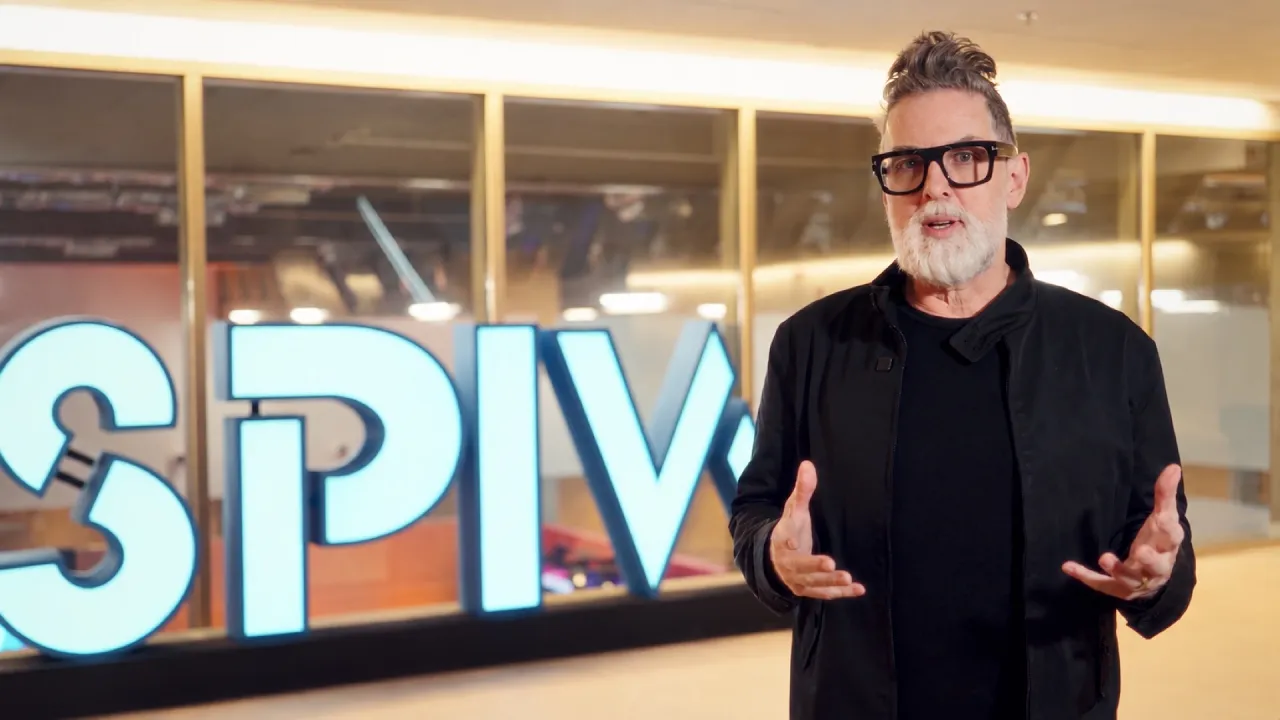
São Paulo, Brazil
São Paulo Innovation Week
Orchestrate or Obsolete: Leading The Near Future of Business

What this talk is about
AI is no longer only a tool you direct. It's becoming a participant you collaborate with — one with its own reasoning. When that happens, leadership stops being about issuing plans and becomes the work of orchestrating participant dynamics: setting intent, tracking what each participant can do, and continuously retuning how the work gets done. Two ideas anchor it. Participants govern the potential of the system. And the nature of the interactions determines the nature of the outcomes.
Take the playbook with you.
The talk was the start of a conversation, not the end of one. This is how you carry it into the week — three principles, three practices, and one shift in how you lead when AI becomes a participant rather than a tool.
For the leaders at SPIW: the participant shift is already changing how innovative teams decide and move.
Here are the AI-generated notes.
These notes were generated from the session transcript. Speaker names, product names, and figures are as spoken; a few likely transcription artifacts are flagged at the end.
One Sentence Takeaway
Stop treating AI as a tool that executes tasks and start treating it as a participant that co-creates outcomes, then lead the resulting human-and-AI system by continuously tracking capabilities, evaluating outcomes, reallocating responsibility, and retuning how participants work together.
Summary
The gap named in this keynote is clock drift: AI can now execute faster than most companies can decide. Work inside organizations still moves through specs, reviews, and committees, while individual employees using AI can build a working tool in an afternoon. When the decision clock runs a quarter or a year behind the execution clock, people route around the process. Multiple studies put the share of employees already using unapproved AI tools in their workflows at half or more. That is shadow execution, and the response to it is not tighter control.
The underlying capability shift is from tool to participant. Reasoning was the unlock. Asking AI to summarize Q2 data and build a deck is a task. Handing it the same data and asking for the strongest case for doubling down on mid-market, plus what would undermine that case, engages it as a reasoning partner. The framing determines the output ceiling. Anthropic's Economic Index found the sophistication of a person's prompting correlates almost exactly with the sophistication of Claude's response, which means the constraint is the quality of human intent and framing rather than model capability.
Once AI participates, individual interactions start compounding into system dynamics: emergence, reciprocity, adaptation. The example built live on stage was a context layer assembled with Claude Code in roughly two hours, holding documents, CRM records, meeting transcripts, chat insights, and voice notes. Claude Code initiated design conversations, challenged its own first UI when told it would not scale, and proposed an aggregated landscape with drill-down layers. Context is what makes this work, and proprietary context is the only durable moat as models commodify everything non-proprietary.
The leadership model that follows is orchestration, borrowed from the conductor rather than the software category. Every musician knows the score, which is the shared context, and the conductor adjusts tempo and balance as conditions change mid-performance. In practice that becomes a cycle: track evolving capabilities, evaluate the outcomes they produce, reallocate responsibility between humans and agents, retune the interaction patterns. Deloitte reported in February that 84% of companies have not yet redesigned a single job around new AI capabilities, which locates almost everyone at the start of this work.
Action Items
[ ] Find out where shadow execution already exists in your organization: which teams are running unapproved AI tools inside real workflows, and what they built.
[ ] Measure your own clock drift by comparing how long a decision takes to approve against how long the work itself now takes to execute.
[ ] Rewrite three recurring prompts from task framing into participant framing by stating the goal, the constraints, what cannot break, and what to watch for.
[ ] Start a context layer this week, even at the smallest scale: ask a chatbot how much context remains in the session, save that context to a file, and begin accumulating it deliberately.
[ ] Identify the high-value tacit knowledge that currently disappears — hallway conversations, phone calls, solo voice notes — and capture it into shared context that humans and agents can both read.
[ ] Define, for each participant in a workflow, what it can decide autonomously and what must escalate. Do this for the AI agents as explicitly as for the people.
[ ] Apply delegate-first to the next new piece of work: before starting, ask what could be handed to an agent or a team of agents.
[ ] Pick the review points that actually matter and drop the rest, since reviewing everything erases the velocity gain.
Key Ideas
Clock drift is an operating-model problem
AI execution has outrun organizational decision-making. Samsung banned ChatGPT twenty days after approving it following three leaks of source code and proprietary information, which was governance. The newer version is different: in February two CNBC reporters with no coding experience built a functioning substitute for their project management SaaS on air in about an hour for roughly $15, and the software sector dropped about 30% as people absorbed the implication. When execution is cheap and fast and decisions are slow, the operating model itself becomes an attack surface.
Shadow execution is the natural response, not a discipline problem
Mark Pike, associate general counsel at Anthropic, is a lawyer with no engineering background. Facing a flood of last-minute legal requests, he spent a single afternoon writing plain-language instructions and markdown files with Claude and produced a legal review plugin his whole team now runs on, covering marketing copy review, contract redlining, and privacy impact assessments, cutting turnaround from days to hours. Pike's version was sanctioned. The unsanctioned equivalent is already running somewhere in most organizations.
Tools do tasks; participants co-create outcomes
The difference is reasoning. A tool prompt asks for a known task inside an existing workflow. A participant prompt supplies intent, constraints, and what to watch out for, and gets back something the asker did not know to request. Command becomes collaboration, one-off prompts become shared context, and the potential of the whole system rises because participants govern that potential.
AI rises to the level of the human interacting with it
Anthropic's January Economic Index found the education level expressed in a human's prompt and the level of Claude's response almost perfectly correlated. The ceiling is set by the quality of intent and framing, not by the model.
Interactions compound into dynamics
Interactions are what participants do together. Dynamics are what the system becomes as a result. The shift runs from discrete to cumulative, prompted to reciprocal, planned to emergent, isolated events to system-level behavior. Matt Schumer's February 10 post, viral past 100 million views, described no longer being needed for the technical work of his job and getting finished work rather than rough drafts from a plain-English description. That is emergence, arriving right as OpenAI announced GPT-5.3 Codex as the first model instrumental in creating itself.
Context is the moat and the bottleneck
Longer context windows and sustained reasoning over them are what unlocked long-horizon autonomous work, a jump visible in METR's evaluation data. What differentiates a business is its proprietary context: customer relationships, internal decisions, institutional knowledge. Most of it is poorly shared today. Agents acting without complete, accurate context will hallucinate or violate standard operating procedures and customer commitments. The industry calls the discipline context engineering.
Relationship engineering as the better frame
The unit of improvement is no longer the prompt, it is the relationship among all participants: humans, AIs, agents, eventually robots. Like any relationship it needs work across four fronts: context coherence, trust and delegation, guardrails and governance, and choosing the right review points rather than reviewing everything.
From doers to deciders
Humans are shifting into a different mode of work. Delegate first is the entry practice: before starting new work, ask how it could be handed to an agent or a team of agents. OpenAI committed in January to agent-first work across the entire organization, not just engineering, by the end of Q1.
Leadership is the orchestration of participant dynamics
An orchestral conductor does not issue task-level commands. Everyone knows the score, and the conductor adjusts as conditions shift. With capabilities changing this fast, plans are out of date on arrival, so leadership becomes continuous tuning. The instruments themselves are changing mid-performance.
Leader Opportunities
AI as participant expands the possible
Reframe existing task prompts to supply intent, constraints, and failure modes rather than instructions.
Bring AI into reasoning about work in progress, including how a message will land with a specific audience.
Treat surfaced, unrequested suggestions from AI as signal about what the system can now do.
Dynamics determine the practical
Build a shared context layer before building agents on top of it.
Capture the tacit knowledge that currently never reaches shared context, especially voice notes and informal conversation.
Define autonomy levels and escalation rules per participant so reciprocity and adaptation stay inside guardrails.
Leadership is the orchestration of participant dynamics
Track capability changes across models and agents as an ongoing leadership input rather than an IT event.
Evaluate outcomes against expectations, then reallocate tasks between humans and agents based on current capability.
Retune interaction patterns and human oversight roles as autonomy shifts, keeping the reallocation decision explicit and human-confirmed.
Talk Flow
Clock drift
Speed rather than strategy is what broke. Samsung, the CNBC vibe-coding demonstration and the 30% software sector drop, and Mark Pike's legal plugin established the external and internal versions of the same gap, leading to shadow execution and the claim that if you cannot decide at the speed of execution, someone else will execute your strategy first.
From tool to participant
Last year prompting was enough. Reasoning changed that. The two-prompt exercise with the audience separated task use from reasoning-partner use, followed by ChatGPT Pulse surfacing calendar-aware content and Claude working inside PowerPoint on the deck being presented.
AI rises to our level
Work has been human-initiated for as long as work has existed, gated by human bandwidth and the speed of human coordination. The pattern has changed to humans and AI shaping each other's next move inside the flow of work, with the Economic Index correlation as evidence that framing sets the ceiling.
Interactions become dynamics
A traditional executive decision loop of brief, report, committee, debate, escalate, decide was contrasted with continuous analysis, options surfaced live, and decisions made while the options are still current. Compounding those interactions produces emergence, reciprocity, and adaptation.
Building the context layer with Claude Code
A live walkthrough of building a context layer from a V1 architecture digest and a V2 brief: plan mode, two subagents for library versions and architecture, back-end built by minute twenty-six, then Claude Code initiating a conversation about visual direction. The first UI showed 31 items across documents, CRM records, chat insights, transcripts, and voice notes. Told it would not scale, Claude Code diagnosed the problem and proposed an aggregated landscape with drill-down layers, which became round two.
Context engineering as relationship engineering
Getting this right takes ongoing intentional effort, and the practices are still forming. A smaller starting point: manage context across chatbot sessions, ask how much context remains, save it to a file, and grow from there. Four challenges follow: coherence, trust and delegation, guardrails and governance, and optimal review.
Doers to deciders, and delegate first
The Deloitte figure of 84% of companies with no job redesigned yet places the room in the early 16% if they act. Delegate first is the practice, with OpenAI's agent-first commitment as the reference point.
Orchestration and the dashboard
Track, evaluate, allocate, retune, demonstrated on a live prototype: a participant ecosystem with a human CEO at 100% autonomy, a business analyst at 70%, and a content agent at 40% running on a GPT-4 class model. A detected capability change (research agent upgraded to a 128K context window, 18% better on financial reasoning) triggered a recommendation to reassign two tasks from the analyst to the agent, a human confirmation, and a shift in the analyst's role from doer to overseer.
Capability awareness expands ambition
Seeing what every participant can do at any moment does more than optimize output allocation; it resets what the organization thinks it can attempt. The dashboard was built with Claude Code in a couple of hours, and the question posed to the room was what they could build with tools already available.
Closing Message — Orchestration expands what the business can become
The real risk is not moving too slowly. It is optimizing a business model the future no longer needs. Efficiency is not the prize; exploration is, and orchestration makes capacity for exploration available in a way that has always been the hard part of the innovator's dilemma. The closing image was mycelium: an invisible network under the forest floor connecting species, sharing nutrients, carrying signals, accumulating context across the ecosystem. The original context layer, and a working model of what a business becomes when humans, AIs, agents, and natural systems all participate. The question is whether we participate intentionally.
Here’s how to bring this thinking into your organization.
Clock Drift
Clock Drift is the gap between how fast AI can execute and how fast an organization can decide. AI now acts in seconds while many companies still decide in weeks. The wider the drift, the more a business exposes itself to shadow systems, missed openings, and strategic misalignment.
AI as a participant, not a tool
Treating AI as a tool limits you to what you already know to ask for. Treating it as a participant engages its reasoning, its context, and what emerges between you. The ceiling on the outcome is no longer the model’s capability. It’s the quality of your intent, your context, and your framing.
Orchestration
Orchestration is the leader’s new core work: setting intent, tracking evolving capabilities, evaluating outcomes, reallocating responsibility, and retuning the patterns as conditions change. The shift is from managing people alone to conducting a system of human and AI participants together.
Questions leaders ask about this
What does it mean to treat AI as a participant instead of a tool?
What is Clock Drift?
How should a leadership team prepare for AI agents?
What happens to managers when AI joins the team?
Will AI replace leadership?
How do we move fast on AI without losing control?
What's the first thing to do on Monday?

About Neil
Neil Redding is The Near Futurist™, helping leaders turn emerging technology into practical business value. He founded Redding Futures after building Near Future practices at Gensler and Thoughtworks, and has keynoted SXSW, the Dubai Future Forum, and events for Meta and Microsoft.
Recent events
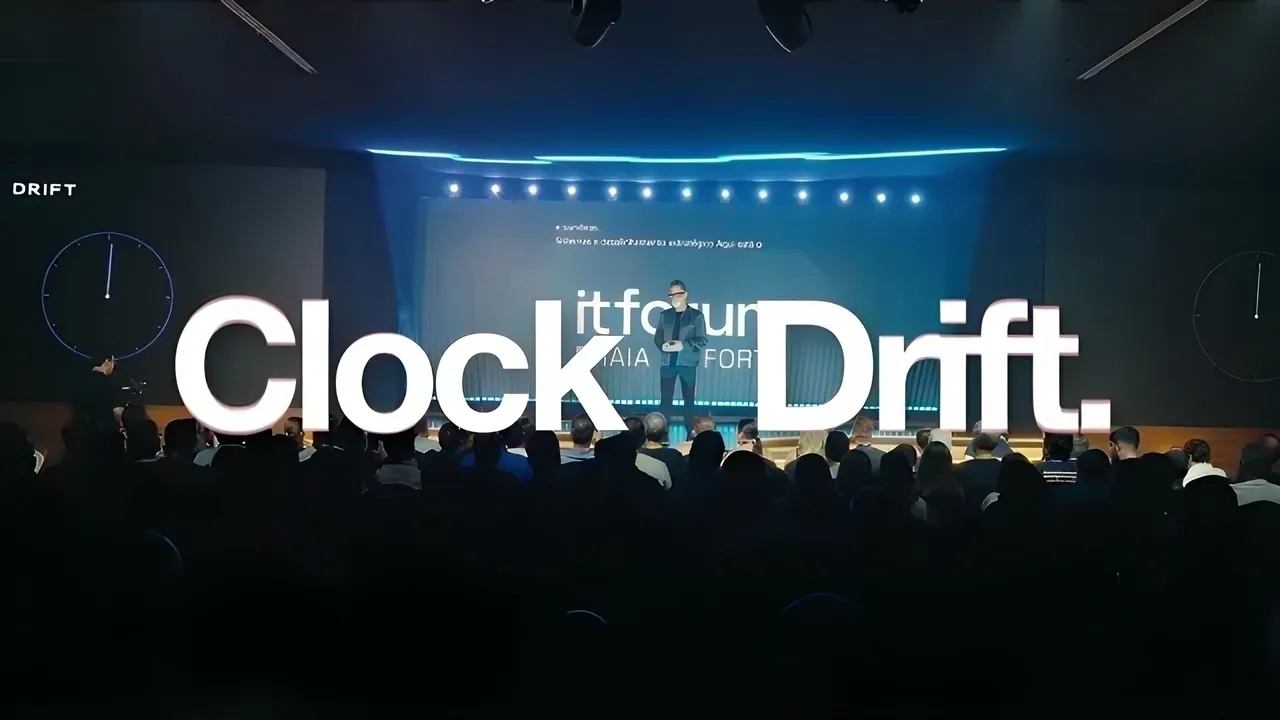
ITForum CIO Summit 2026
Neil addresses the Top CIOs in Brazil
SPIW 2026 highlights
Neil at São Paulo Innovation Week 2026

SXSW 2026 summary
Neil's extensive SXSW 2026 participation.

Agentic AI Keyshop for Business Leaders
Neil leads an Agentic AI keyshop to 40 business leaders across diverse industries.

RD Summit 2025 Summary
Neil delivers the keynote at the largest marketing and sales event in LATAM.

Saúde Business Forum 2025 Summary
Neil delivers the opening keynote at the leading C-suite gathering in the Brazilian Healthcare industry, with many video testimonials.

Rio Innovation Week 2025 summary
Neil delivers the closing keynote as well as additional panels at Rio Innovation Week 2025, one of the largest innovation gatherings in the world.

AI Agents Keyshop for the C-Suite
Neil leads an Agentic AI keyshop (highly interactive, actionable keynote) for 20 C-levels across leading Brazilian and global companies.

Universo TOTVS 2025 summary
Summary of Neil's participation at the annual gathering of TOTVS, the technology company that powers 25% of Brazilian GDP.

SXSW 2025 summary
Highlights of Neil's SXSW 2025 activity
Recent events
ITForum CIO Summit 2026
Neil addresses the Top CIOs in Brazil
SPIW 2026 highlights
Neil at São Paulo Innovation Week 2026
SXSW 2026 summary
Neil's extensive SXSW 2026 participation.
Agentic AI Keyshop for Business Leaders
Neil leads an Agentic AI keyshop to 40 business leaders across diverse industries.
RD Summit 2025 Summary
Neil delivers the keynote at the largest marketing and sales event in LATAM.
Saúde Business Forum 2025 Summary
Neil delivers the opening keynote at the leading C-suite gathering in the Brazilian Healthcare industry, with many video testimonials.
Rio Innovation Week 2025 summary
Neil delivers the closing keynote as well as additional panels at Rio Innovation Week 2025, one of the largest innovation gatherings in the world.
AI Agents Keyshop for the C-Suite
Neil leads an Agentic AI keyshop (highly interactive, actionable keynote) for 20 C-levels across leading Brazilian and global companies.
Universo TOTVS 2025 summary
Summary of Neil's participation at the annual gathering of TOTVS, the technology company that powers 25% of Brazilian GDP.
SXSW 2025 summary
Highlights of Neil's SXSW 2025 activity