One Sentence Takeaway
Startups that treat AI as a reasoning participant and redesign roles around its capabilities can outpace the 84% of established companies that haven’t, leading through orchestration: track, evaluate, reallocate, retune.
Summary
At the SEBRAE Startup Summit in Florianópolis, Neil Redding names what broke: AI can now execute faster than companies of any size can decide, a gap he calls Clock Drift. The evidence runs from Samsung’s early ChatGPT ban to two non-technical CNBC reporters vibe-coding a working replacement for their project management tool in about an hour for fifteen dollars. Inside organizations, the same force produces shadow execution: around half of employees at larger companies use unapproved AI tools, many of them built by startups like the ones in the room. The underlying shift is from tool to participant. Reasoning changed the relationship: tools do tasks, participants co-create outcomes, and the ceiling on results is now the quality of human intent, framing, and context. Interactions compound into dynamics, which Neil shows by building a context layer for his own business live with Claude Code, including the moment it challenges his design and proposes a better one. Proprietary context is a company’s only moat as models commodify everything else, so a shared context layer is this year’s priority for every team. Humans are moving from mostly doers to mostly deciders, and here startups hold an edge: while 84% of established companies haven’t redesigned a single role around AI, small teams can define roles around new capabilities and move first. The leadership model is orchestration: track, evaluate, reallocate, retune, turning Clock Drift into clock drive.
Key Ideas
Clock Drift is an operating-model problem
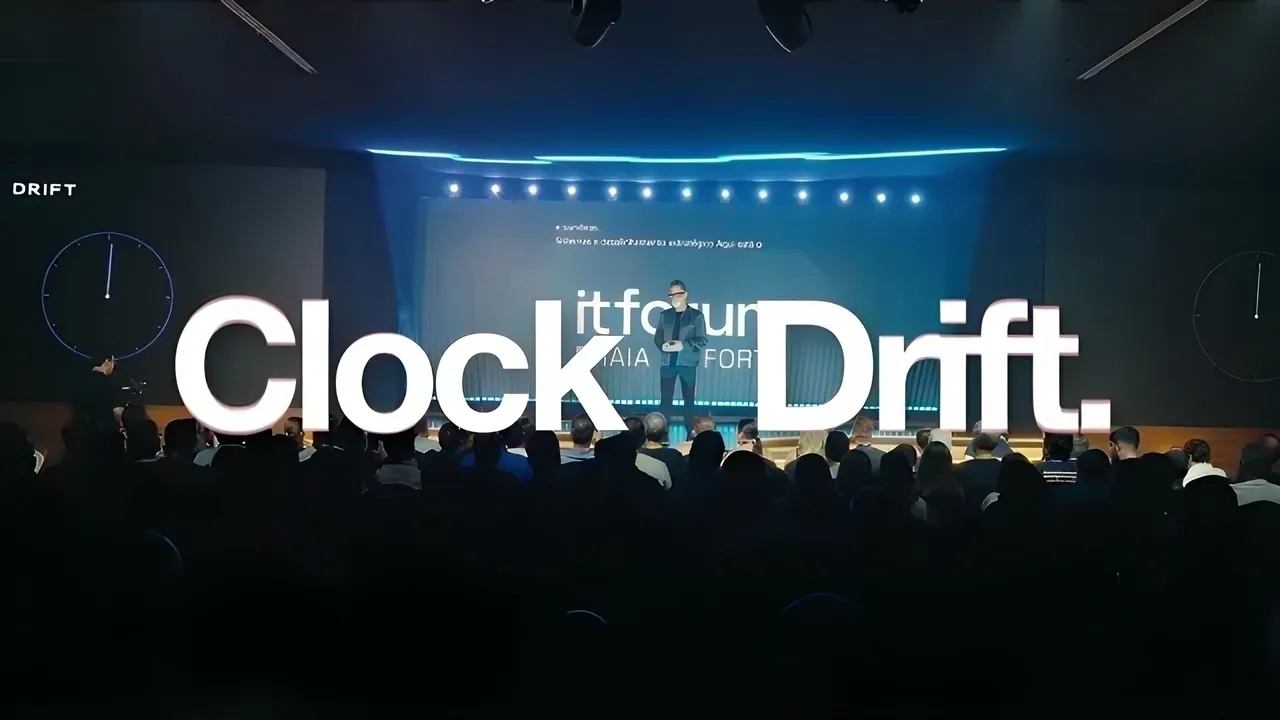
Work still moves through specs, reviews, and committees while AI on every laptop runs at a different tempo: a working tool in an afternoon, weeks to approve the idea. Neil defines Clock Drift as AI executing faster than the company can decide, and stresses it comes from organizations failing to move with AI. Samsung’s ChatGPT ban, the CNBC reporters’ fifteen-dollar tool, and the roughly 30% software-sector drop that followed show the stakes.
Shadow execution is already the practical reality
Mark Pike, associate general counsel at Anthropic and a lawyer rather than an engineer, built a legal review plugin with Claude in an afternoon: privacy impact assessments, marketing copy review, contract redlining, turnaround cut from days to hours, all from plain-language instructions and markdown files. His version is sanctioned. Studies put about half of employees at larger companies on unapproved AI tools, many of them products that startups build. That is shadow execution.
Tools do tasks; participants co-create outcomes
Last year, prompting skills were enough to stay competitive. Reasoning, one of 2025’s biggest capability unlocks, changed the relationship: the moment AI reasons rather than just responding to commands, it becomes a participant. A participant prompt supplies the goal, the constraints, and what can’t break, and returns judgment. Anthropic’s Economic Index found that how humans prompt is how Claude responds, so the ceiling is the quality of human intent, context, and framing.
Interactions compound into dynamics
The nature of the interactions determines the nature of the outcomes. A traditional decision loop of brief, report, committee, and escalation misses signals over weeks; an evolved pattern of briefed intent and continuously surfaced live options converges faster with less rework. Compounding patterns move a system from discrete to cumulative, prompted to reciprocal, planned to emergent. Matt Schumer’s viral February article and OpenAI’s GPT-5.3 Codex helping create itself mark that emergence.
Context is the moat, and relationships are the unit of improvement
Longer context and sustained reasoning drove the recent jump in long-horizon autonomous work, visible in METR’s data. What differentiates any business, from startup to hundred-year-old company, is proprietary context: customer relationships, hallway decisions, voice notes that never get shared. Neil builds his context layer live with Claude Code, then reframes context engineering as relationship engineering, worked across coherence, trust and delegation, guardrails and governance, and optimal human review.
Doers to deciders, and the startup advantage
Humans are shifting from mostly doers to mostly deciders. Deloitte finds 84% of established companies haven’t redesigned a single role around new AI capabilities, which is exactly where startups win: speed has always been their edge, and now they can define roles around emerging capabilities faster than incumbents. The entry practice is delegate first, and the leadership model is orchestration, shown live on Neil’s dashboard as an upgraded agent takes two financial tasks from a human analyst.
Notable moments:
A show of hands on who recognizes Claude Code: most of the room raises a hand, and Neil notes that in most rooms he speaks to, very few do.
Claude, working inside PowerPoint, reviews Neil’s own slide for this room and pushes back that “existential” is a big claim needing evidence; Neil asks the audience to hold him accountable to it.
During the live build, Claude Code answers Neil’s scaling challenge with “Good challenge,” names the core tension, and proposes the aggregated landscape with drill-down layers that becomes round two of the context layer.
Asked how many have robots in their companies, a few hands go up; Neil predicts that by this time next year, a lot more will, with robots already on the Startup Summit show floor.
In Neil’s words:
“If your organization can’t decide at the speed of execution, someone else is gonna execute your strategy before you can even approve it.”
“What has now become possible that your organization does not allow to exist?”
“Leadership is orchestration, and orchestration turns clock drift into clock drive.”