Praia do Forte, Brazil

ITForum CIO Summit

Orchestrate or Obsolete: Leading the AI-Powered Near Future

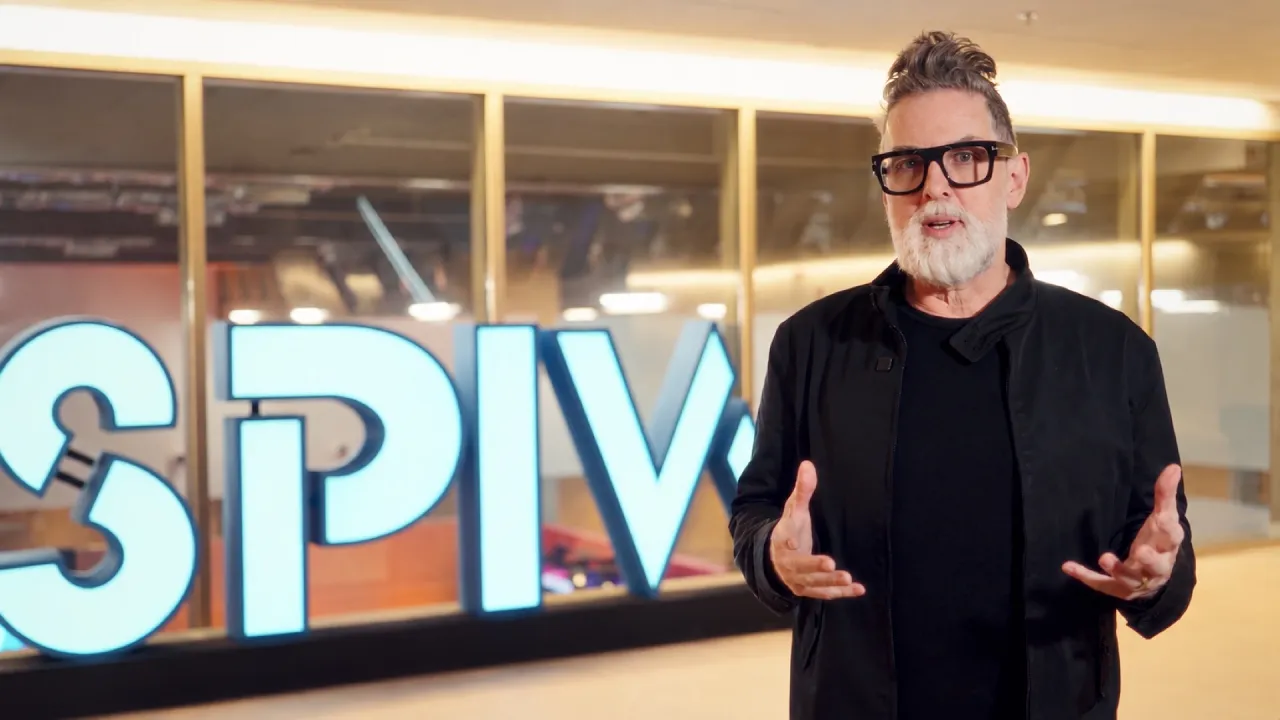
Neil Redding gesturing to the audience at the IT Forum CIO Summit 2026 in Praia do Forte.
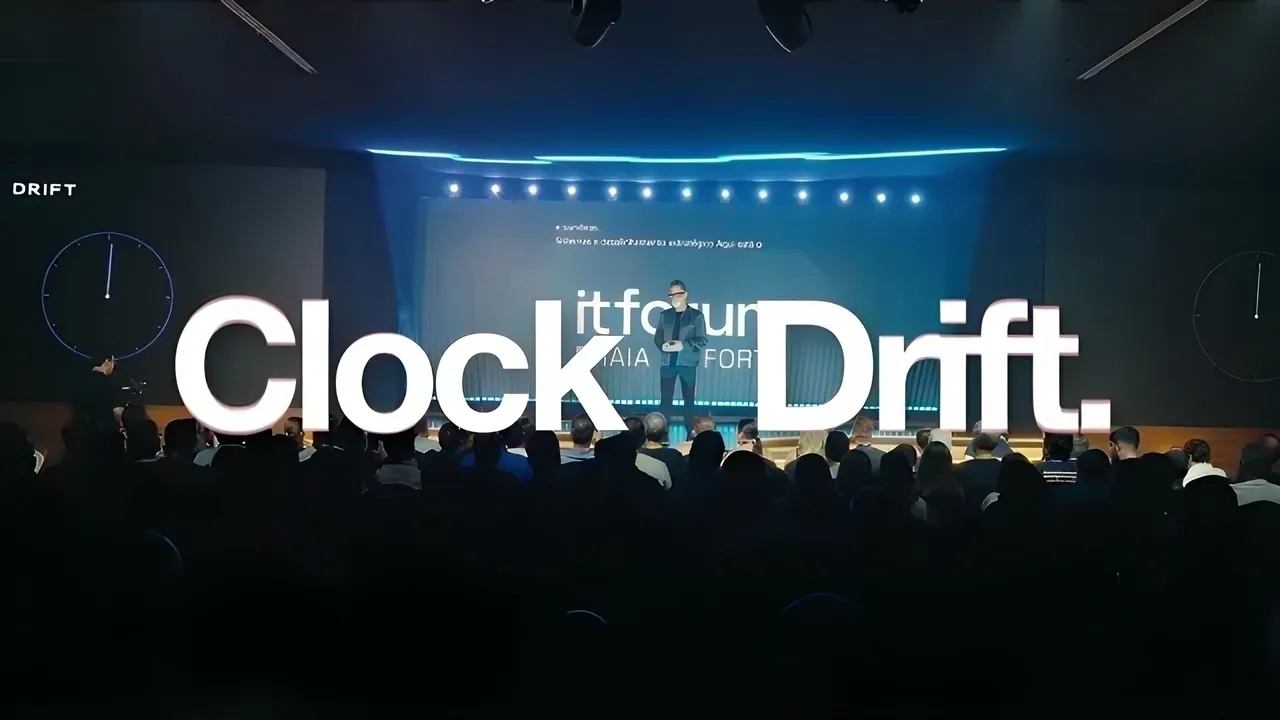
Neil Redding on stage at the IT Forum CIO Summit 2026 in Praia do Forte, with live Portuguese captions above the event logo.
Neil Redding speaking at the IT Forum CIO Summit 2026 in Praia do Forte, Brazil.
Wide view of the IT Forum CIO Summit audience as Neil Redding builds a context layer live with Claude Code on three screens.
Neil Redding pointing to a live chatbot context-window exchange on screen at the IT Forum CIO Summit 2026.
Neil Redding presenting the “Orchestration as Leadership” slide at the IT Forum CIO Summit 2026.
Neil Redding in a moderated conversation on stage at the IT Forum CIO Summit 2026.

What this talk is about

AI can now execute faster than most companies can decide. Neil Redding names that gap Clock Drift and shows the CIOs at the IT Forum CIO Summit why it has become an operating-model problem: shadow tools spread, signals get missed, and decisions arrive after they mattered. The answer is not tighter control. When AI reasons, it stops being a tool and becomes a participant, and leadership becomes orchestration: setting intent, tracking what each participant can do, evaluating outcomes, and retuning how humans and AI work together. Decisions stay deliberate; execution runs at AI speed.

Take the playbook with you.

The talk was the start of a conversation, not the end of one. This is how you carry it into the week — three principles, three practices, and one shift in how you lead when AI becomes a participant rather than a tool.

For the leaders at the IT Forum CIO Summit: Clock Drift turns the operating model into an attack surface, and orchestration is the CIO’s response.

By signing up you’ll also receive occasional updates on orchestration and AI-enabled leadership. You can unsubscribe anytime.

It’s yours.

I’ve also sent it to your email, along with one quick question.

Here are the AI-generated notes.

These notes were generated from the session transcript. Speaker names, product names, and figures are as spoken; a few likely transcription artifacts are flagged at the end.

One Sentence Takeaway

Stop assigning AI tasks and start working with it as a reasoning participant, then lead the whole system through orchestration: track capabilities, evaluate outcomes, reallocate responsibility, and retune interactions until Clock Drift turns into clock drive.

Summary

At the IT Forum CIO Summit in Praia do Forte, Neil Redding names what broke: AI can now execute faster than most organizations can decide, a gap he calls Clock Drift. Samsung’s early ChatGPT ban was a governance story; the newer signals are two non-technical reporters building a working project-management tool in about an hour for $15, and a lawyer at Anthropic shipping a legal review plugin his whole team runs. The unsanctioned version of that plugin already exists inside most companies: shadow execution, with roughly half of employees using unapproved AI tools. If an organization cannot decide at the speed of execution, someone else executes its strategy first, which makes the operating model itself an attack surface. The underlying shift is from tool to participant. Reasoning changed the relationship: tools do tasks, participants co-create outcomes, and the ceiling on results is now the quality of human intent, framing, and context. Interactions compound into dynamics such as emergence and reciprocity, shown live as Neil builds a context layer for his own business with Claude Code, which questions his design and proposes a better one. Proprietary context is the durable moat, so maintaining a shared context layer is a 2026 priority. The leadership model that follows is orchestration: track evolving capabilities, evaluate outcomes, reallocate responsibility between humans and agents, and retune the interaction patterns. Done well, deliberate decisions ride on AI-speed execution, and Clock Drift becomes clock drive.

Key Ideas

Clock drift is an operating-model problem

Work inside organizations still moves through specs, reviews, and committees, while AI-enabled work on everyone’s laptop runs at a different tempo. Neil defines Clock Drift as AI executing faster than the company can decide, and stresses that the drift comes from organizations failing to move with AI rather than from AI moving too fast. Samsung’s early ChatGPT ban, the CNBC reporters’ $15 vibe-coded tool, and the roughly 30% software-sector drop that followed show the gap at market scale.

Shadow execution is the natural response

Mark Pike, associate general counsel at Anthropic and not an engineer, spent an afternoon with Claude building a legal review plugin his whole team now uses, covering marketing copy review, contract redlining, and privacy impact assessments, cutting turnaround from days to hours. His version is sanctioned. Recent studies put about 50% of employees on unapproved AI tools, which is what happens when the decision clock runs a quarter or a year behind the execution clock.

Tools do tasks; participants co-create outcomes

Last year, prompting skills were enough. Reasoning changed that: the moment AI reasons rather than just responding to commands, it stops being a tool and becomes a participant. A task prompt asks for a known deliverable; a participant prompt supplies intent, constraints, and what to watch for, and returns judgment. Anthropic’s Economic Index found prompt sophistication and response quality nearly perfectly correlated, so the ceiling is the quality of human intent, framing, and context rather than model capability.

Interactions compound into dynamics

The nature of the interactions determines the nature of the outcomes. A traditional loop of brief, report, committee, and escalation loses signals over weeks; an evolved pattern of briefed intent, continuous analysis, and live options converges in days with less rework. As patterns compound, the system shifts from discrete to cumulative, prompted to reciprocal, planned to emergent. Matt Schumer’s viral post about no longer being needed for the technical work of his job marks that emergence, alongside GPT-5.3 Codex helping create itself.

Context is the moat and the bottleneck

Larger context windows and sustained reasoning are behind the recent jump in long-horizon autonomous work, visible in METR’s evaluation data. What differentiates a business is its proprietary context: customer relationships, internal decisions, institutional knowledge, much of it poorly shared, including voice notes and chat insights. Neil builds a context layer for his own business live with Claude Code, then reframes context engineering as relationship engineering across four challenges: coherence, trust and delegation, guardrails and governance, and optimal human review.

Leadership is the orchestration of participant dynamics

Humans are moving from mostly doers to mostly deciders, yet Deloitte finds 84% of companies have not redesigned a single job around new AI capabilities. The practice Neil prescribes is delegate first, then a continuous cycle: track evolving capabilities, evaluate outcomes, reallocate responsibility between humans and agents, and retune interaction patterns. His orchestration dashboard shows the cycle live as an upgraded research agent takes two financial tasks from analyst Casey Kim, with a human confirming and Casey moving to oversight.

Notable moments:

  • A show of hands on two prompts for the same Q2 sales data: the room recognizes both the task version and the participant version, and more hands go up for the participant framing.

  • Claude, working inside PowerPoint, reviews Neil’s own Clock Drift slide for an audience of top Brazilian CIOs and advises him to substantiate the concept first; Neil tells the room, “keep me honest.”

  • During the live Claude Code build, Claude pushes back on Neil’s tile-based design (“Good challenge”) and proposes an aggregated landscape with drill-down layers that becomes round two of the context layer.

  • A callback to the event’s own survey: 34% of the room named orchestrating digital transformation among their top concerns for 2026. Neil’s recurring “tamo juntos” lands with the Brazilian room.

In Neil’s words:

  • “If your organization can’t decide at the speed of execution, someone else is going to execute your strategy before you can even approve it.”

  • “Leadership is the orchestration of participant dynamics.”

  • “Leadership is orchestration. And orchestration turns Clock Drift into clock drive.”
These notes were generated from the session transcript. Speaker names, product names, and figures are as spoken; a few likely transcription artifacts are flagged at the end.

One Sentence Takeaway

Stop assigning AI tasks and start working with it as a reasoning participant, then lead the whole system through orchestration: track capabilities, evaluate outcomes, reallocate responsibility, and retune interactions until Clock Drift turns into clock drive.

Summary

At the IT Forum CIO Summit in Praia do Forte, Neil Redding names what broke: AI can now execute faster than most organizations can decide, a gap he calls Clock Drift. Samsung’s early ChatGPT ban was a governance story; the newer signals are two non-technical reporters building a working project-management tool in about an hour for $15, and a lawyer at Anthropic shipping a legal review plugin his whole team runs. The unsanctioned version of that plugin already exists inside most companies: shadow execution, with roughly half of employees using unapproved AI tools. If an organization cannot decide at the speed of execution, someone else executes its strategy first, which makes the operating model itself an attack surface. The underlying shift is from tool to participant. Reasoning changed the relationship: tools do tasks, participants co-create outcomes, and the ceiling on results is now the quality of human intent, framing, and context. Interactions compound into dynamics such as emergence and reciprocity, shown live as Neil builds a context layer for his own business with Claude Code, which questions his design and proposes a better one. Proprietary context is the durable moat, so maintaining a shared context layer is a 2026 priority. The leadership model that follows is orchestration: track evolving capabilities, evaluate outcomes, reallocate responsibility between humans and agents, and retune the interaction patterns. Done well, deliberate decisions ride on AI-speed execution, and Clock Drift becomes clock drive.

Key Ideas

Clock drift is an operating-model problem

Work inside organizations still moves through specs, reviews, and committees, while AI-enabled work on everyone’s laptop runs at a different tempo. Neil defines Clock Drift as AI executing faster than the company can decide, and stresses that the drift comes from organizations failing to move with AI rather than from AI moving too fast. Samsung’s early ChatGPT ban, the CNBC reporters’ $15 vibe-coded tool, and the roughly 30% software-sector drop that followed show the gap at market scale.

Shadow execution is the natural response

Mark Pike, associate general counsel at Anthropic and not an engineer, spent an afternoon with Claude building a legal review plugin his whole team now uses, covering marketing copy review, contract redlining, and privacy impact assessments, cutting turnaround from days to hours. His version is sanctioned. Recent studies put about 50% of employees on unapproved AI tools, which is what happens when the decision clock runs a quarter or a year behind the execution clock.

Tools do tasks; participants co-create outcomes

Last year, prompting skills were enough. Reasoning changed that: the moment AI reasons rather than just responding to commands, it stops being a tool and becomes a participant. A task prompt asks for a known deliverable; a participant prompt supplies intent, constraints, and what to watch for, and returns judgment. Anthropic’s Economic Index found prompt sophistication and response quality nearly perfectly correlated, so the ceiling is the quality of human intent, framing, and context rather than model capability.

Interactions compound into dynamics

The nature of the interactions determines the nature of the outcomes. A traditional loop of brief, report, committee, and escalation loses signals over weeks; an evolved pattern of briefed intent, continuous analysis, and live options converges in days with less rework. As patterns compound, the system shifts from discrete to cumulative, prompted to reciprocal, planned to emergent. Matt Schumer’s viral post about no longer being needed for the technical work of his job marks that emergence, alongside GPT-5.3 Codex helping create itself.

Context is the moat and the bottleneck

Larger context windows and sustained reasoning are behind the recent jump in long-horizon autonomous work, visible in METR’s evaluation data. What differentiates a business is its proprietary context: customer relationships, internal decisions, institutional knowledge, much of it poorly shared, including voice notes and chat insights. Neil builds a context layer for his own business live with Claude Code, then reframes context engineering as relationship engineering across four challenges: coherence, trust and delegation, guardrails and governance, and optimal human review.

Leadership is the orchestration of participant dynamics

Humans are moving from mostly doers to mostly deciders, yet Deloitte finds 84% of companies have not redesigned a single job around new AI capabilities. The practice Neil prescribes is delegate first, then a continuous cycle: track evolving capabilities, evaluate outcomes, reallocate responsibility between humans and agents, and retune interaction patterns. His orchestration dashboard shows the cycle live as an upgraded research agent takes two financial tasks from analyst Casey Kim, with a human confirming and Casey moving to oversight.

Notable moments:

  • A show of hands on two prompts for the same Q2 sales data: the room recognizes both the task version and the participant version, and more hands go up for the participant framing.

  • Claude, working inside PowerPoint, reviews Neil’s own Clock Drift slide for an audience of top Brazilian CIOs and advises him to substantiate the concept first; Neil tells the room, “keep me honest.”

  • During the live Claude Code build, Claude pushes back on Neil’s tile-based design (“Good challenge”) and proposes an aggregated landscape with drill-down layers that becomes round two of the context layer.

  • A callback to the event’s own survey: 34% of the room named orchestrating digital transformation among their top concerns for 2026. Neil’s recurring “tamo juntos” lands with the Brazilian room.

In Neil’s words:

  • “If your organization can’t decide at the speed of execution, someone else is going to execute your strategy before you can even approve it.”

  • “Leadership is the orchestration of participant dynamics.”

  • “Leadership is orchestration. And orchestration turns Clock Drift into clock drive.”

Here’s how to bring this thinking into your organization.

Clock Drift

Clock Drift is the gap between how fast AI can execute and how fast an organization can decide. AI now acts in seconds while many companies still decide in weeks. The wider the drift, the more a business exposes itself to shadow systems, missed openings, and strategic misalignment.

AI as a participant, not a tool 

Treating AI as a tool limits you to what you already know to ask for. Treating it as a participant engages its reasoning, its context, and what emerges between you. The ceiling on the outcome is no longer the model’s capability. It’s the quality of your intent, your context, and your framing.

Orchestration 

Orchestration is the leader’s new core work: setting intent, tracking evolving capabilities, evaluating outcomes, reallocating responsibility, and retuning the patterns as conditions change. The shift is from managing people alone to conducting a system of human and AI participants together.

Questions leaders ask about this

What is Clock Drift?

What does it mean to treat AI as a participant instead of a tool?

How should CIOs respond to Clock Drift?

How should CIOs handle shadow AI in their organization?

What is a context layer and why does it matter?

Will AI replace leadership?

What's the first thing to do on Monday?

About Neil

Neil Redding is The Near Futurist™, helping leaders turn emerging technology into practical business value. He founded Redding Futures after building Near Future practices at Gensler and Thoughtworks, and has keynoted SXSW, the Dubai Future Forum, and events for Meta and Microsoft.

Recent events

ITForum CIO Summit 2026

Neil addresses the Top CIOs in Brazil

SPIW 2026 highlights

Neil at São Paulo Innovation Week 2026

SXSW 2026 summary

Neil's extensive SXSW 2026 participation.

Agentic AI Keyshop for Business Leaders

Neil leads an Agentic AI keyshop to 40 business leaders across diverse industries.

RD Summit 2025 Summary

Neil delivers the keynote at the largest marketing and sales event in LATAM.

Saúde Business Forum 2025 Summary

Neil delivers the opening keynote at the leading C-suite gathering in the Brazilian Healthcare industry, with many video testimonials.

Rio Innovation Week 2025 summary

Neil delivers the closing keynote as well as additional panels at Rio Innovation Week 2025, one of the largest innovation gatherings in the world.

AI Agents Keyshop for the C-Suite

Neil leads an Agentic AI keyshop (highly interactive, actionable keynote) for 20 C-levels across leading Brazilian and global companies.

Universo TOTVS 2025 summary

Summary of Neil's participation at the annual gathering of TOTVS, the technology company that powers 25% of Brazilian GDP.

SXSW 2025 summary

Highlights of Neil's SXSW 2025 activity

© 2026 Neil Redding. All Rights Reserved.

© 2026 Neil Redding. All Rights Reserved.

© 2026 Neil Redding. All Rights Reserved.