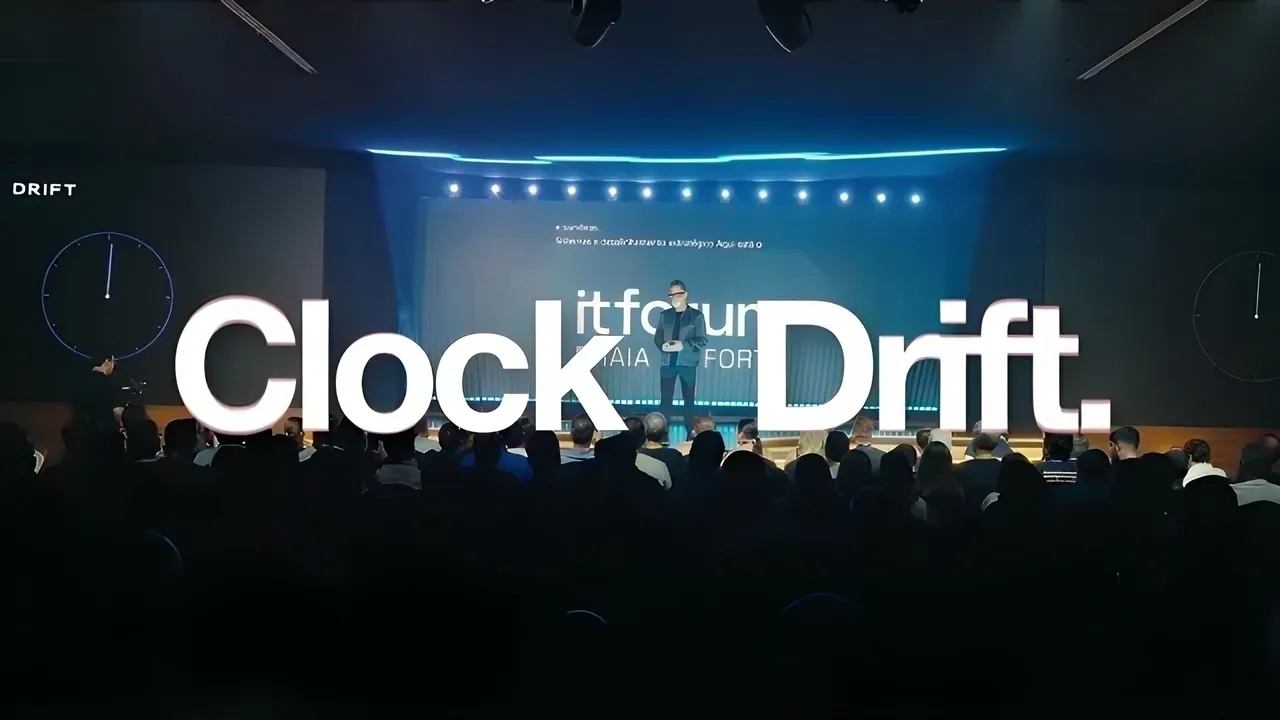
Porto Alegre, Brazil
IEL Innovation Forum 2026
The Industry That Leads the Future Decides Differently

What this talk is about
At the IEL Innovation Forum 2026, Neil Redding, The Near Futurist, spoke to about 1,100 industry leaders and executives at the FIERGS Theater in Porto Alegre on the forum’s theme, The Industry That Leads the Future. Emerging technology now evolves faster than most organizations can decide. Automation, connected operations and AI are compressing the time between a signal and its consequences, and the gap between how fast a business can execute and how fast it can choose is becoming the defining competitive risk. Neil calls this Clock Drift, and he showed how industrial leaders can close it: by redesigning how decisions get made, treating their organization’s knowledge as its most defensible asset, and building companies that adapt continuously instead of in occasional transformations.
Take the playbook with you.
The talk was the start of a conversation, not the end of one. This is how you carry it into the week — three principles, three practices, and one shift in how you lead when AI becomes a participant rather than a tool.
For the leaders at IEL Innovation Forum: the industry that leads the future will be the one deciding as fast as its AI can act.
Here are the AI-generated notes.
These notes were generated from the keynote transcript (Porto Alegre, November 12, 2026).
One Sentence Takeaway
When AI can execute faster than your company can decide, the answer isn’t tighter control. Redesign who decides what, treat your knowledge as your most defensible asset, and build a company that adapts continuously instead of in occasional transformations.
Summary
Neil opened with the gap he calls Clock Drift. Inside most companies, work still moves through specs, reviews and committees, while on everyone’s laptop AI-enabled work moves at a different tempo. Your best people can build a working tool in an afternoon, then wait weeks for the idea to be approved. That gap creates frustration, shadow systems and strategic misalignment. If your organization can’t decide at the speed of execution, someone else will execute your strategy first: someone inside the company if you’re lucky, a competitor if you’re not.
He brought it onto the factory floor. At 9:02 on a Tuesday, a sensor flags a problem on one of your machines. Who in your company can decide at 9:03 to stop the line, order the part or call the customer? If a competitor with the same machines can decide at 9:03 and you can’t, that gap is the attack surface. It isn’t a technology problem. It’s a decision-making problem, which means you can start fixing it without buying any new technology.
The shift underneath is from tool to participant. Reasoning was the unlock in 2025: once AI reasons rather than just responds, it behaves more like a member of the team than a hammer. Industrial companies already work this way with self-steering tractors, machines that measure the part they just cut, scales that reject underweight boxes and sorters that grade fruit. What’s new is how fast those participants are getting better, and that the way people and AI interact now shapes the outcome. As Neil put it, participants govern the potential of the system, and the nature of the interactions determines the nature of the outcomes.
Context is what makes this work, and proprietary context is a company’s only moat as AI commoditizes everything else. Neil asked the room what their factory would forget if the person running production for 20 years retired tomorrow. He showed the context layer he built in his own business with Claude Code, and called the practice relationship engineering: the work of improving the relationships among all the participants, from people and AI agents to robots, cobots, drones and even a customer’s AI agent asking for a quote.
Those relationships come down to decisions. People are moving from Doers to Deciders, and the work of the near future is defining and evolving decision boundaries. IEL attendees named people as their top challenge: finding, keeping and upskilling them. Neil’s answer was Delegate First, which moves people’s work up from doing to directing and deciding. He closed with orchestration, the leadership model for a system of humans, AI and machines, and a live demo of the track, evaluate, reallocate, retune cycle. Orchestration, he said, turns Clock Drift into Clock Drive.
Action Items
Pick one machine signal or customer event and ask who can decide at 9:03. Write down how long that decision takes today.
List the decisions you still make only because nobody else has permission. Decide which can go to your team, which to AI agents or machines, and which stay with you.
Find out where shadow execution already happens: which teams use AI tools nobody approved, and what they built. Then give them rules, an owner and a review point.
Rewrite one recurring prompt from a task into a participant brief: what you’re trying to do, what can’t break and what to watch for.
Capture what your most experienced production person knows: the settings, the exceptions, the supplier you can’t rely on in winter. Start your context layer there.
Before starting a piece of work you’ve done a thousand times, ask how you could delegate it to an agent or a team of agents. Start small, the way you would with a new hire.
Name someone on your leadership team to track how AI capabilities are changing and report what that makes possible.
Key Ideas
Clock Drift is a decision problem, not a technology problem
AI can now execute faster than companies can decide. Samsung banned ChatGPT about 20 days after approving it, after three leaks of source code and proprietary information. More recently, two CNBC reporters with no technical background built a working replacement for their project management tool on air in about an hour, and the software sector fell about 30% in the following weeks. The gap is in how organizations decide, so it can be closed without new technology.
The gap between knowing and deciding is the attack surface
The machine knows at 9:02. The question is whether your company can decide at 9:03. While you work out who decides, the delivery slips, the customer’s system shifts part of the order to another supplier, and next month you’re lower on their list. Nobody made a big decision, but the outcome changed.
Shadow execution is the natural response
Mark Pike, associate general counsel at Anthropic and a lawyer rather than an engineer, spent an afternoon describing in plain language what a good legal review looks like and built a legal review plugin his whole team now uses, cutting turnaround from days to hours. His version was approved. Studies Neil has seen put the share of employees using unapproved AI tools at about half, often because no one has told them the rules.
Tools do tasks; participants co-create outcomes
Asking AI to summarize Q2 sales data into a slide is a task. Asking for the strongest case for doubling down on the mid-market, and what would undermine it, invites a reasoning partner. Neil showed Claude in PowerPoint advising how one of his slides would land with industrial leaders in southern Brazil. Framing AI as a participant moves the work from command to collaboration and from one-off prompts to shared context.
Interactions become dynamics
Interactions are what participants do together; dynamics are how the system behaves because of them. A traditional executive decision runs through briefings, reports and committees while signals are missed. An evolved one has the CEO brief intent and constraints, AI analyzing continuously, and people deciding while the options are still live. The people, strategy and AI are the same. The interaction pattern changed, and so did the outcome.
Context is the only moat
What differentiates a business is its proprietary context: customer relationships, internal decisions and deep knowledge of its offerings and customers’ needs. Most of it lives in people’s heads and isn’t shared with anyone, human or machine. Long-context AI models can now reason over far more of it, for far longer, which is what made long-horizon autonomous work possible this year.
Relationship Engineering
The industry calls it context engineering; Neil calls it relationship engineering, because the way to get the best from AI is no longer the prompt but the relationship. Industrial leaders already have the skill: setting up and adjusting machines is relationship work. The roster is growing, from inspection cameras and cobots to field-mapping drones and a customer’s AI agent asking for a quote, and each one is a relationship to work on.
From Doers to Deciders
Relationship engineering comes down to decisions: who has the context, who is trusted, what the rules are and what gets reviewed. Some decisions can go to people on your team, some to AI agents and machines, and some should always carry the leader’s signature. The industry that leads the future decides differently.
Delegate First answers the people challenge
Before starting a piece of work, ask how you could delegate it to an agent or a team of agents. People’s work doesn’t disappear; it moves up from doing the work to directing it, reviewing it and deciding. That addresses both the people you can’t find and the people you need to upskill.
Leadership is the orchestration of participant dynamics
A conductor doesn’t command each musician. Everyone knows the score, which is the shared context, and the conductor adjusts as the performance unfolds. With capabilities changing this fast, plans are out of date on arrival, so leadership becomes continuous tuning: track evolving capabilities, evaluate outcomes, reallocate responsibility, retune the interaction patterns.
Closing Message: Why not me, why not now, why not this
The real risk isn’t moving too slowly. It’s optimizing a business model the future no longer needs, and the real opportunity is exploration. Neil closed with mycelium, the forest’s original context layer, connecting slow trees and fast fungi and reallocating resources across the ecosystem, as the model for a business made of people, AI, agents, robots and machines. The two clocks running at different speeds are a force of nature; leaders can harness them so decisions stay deliberate while execution runs at AI speed, turning Clock Drift into Clock Drive. For the hesitant owner: why not me? Pick one decision and start there. For the overwhelmed manager: why not now? Give it an owner, rules and review. For the ambitious innovator: why not this? Redesign just one decision.
Here’s how to bring this thinking into your organization.
Clock Drift
Clock Drift is the gap between how fast AI can execute and how fast an organization can decide. AI now acts in seconds while many companies still decide in weeks. The wider the drift, the more a business exposes itself to shadow systems, missed openings, and strategic misalignment.
AI as a participant, not a tool
Treating AI as a tool limits you to what you already know to ask for. Treating it as a participant engages its reasoning, its context, and what emerges between you. The ceiling on the outcome is no longer the model’s capability. It’s the quality of your intent, your context, and your framing.
Orchestration
Orchestration is the leader’s new core work: setting intent, tracking evolving capabilities, evaluating outcomes, reallocating responsibility, and retuning the patterns as conditions change. The shift is from managing people alone to conducting a system of human and AI participants together.
Questions leaders ask about this
What is Clock Drift?
Why does Clock Drift matter to industrial companies?
What does it mean to treat AI as a participant instead of a tool?
What is a context layer, and where should we start?
How does Delegate First help with hiring and upskilling?
Which decisions should a leader keep?
What does orchestration look like in practice?
We’re a mid-sized company. Where do we start?

About Neil
Neil Redding is The Near Futurist™, helping leaders turn emerging technology into practical business value. He founded Redding Futures after building Near Future practices at Gensler and Thoughtworks, and has keynoted SXSW, the Dubai Future Forum, and events for Meta and Microsoft.
Recent events
ITForum CIO Summit 2026
Neil addresses the Top CIOs in Brazil
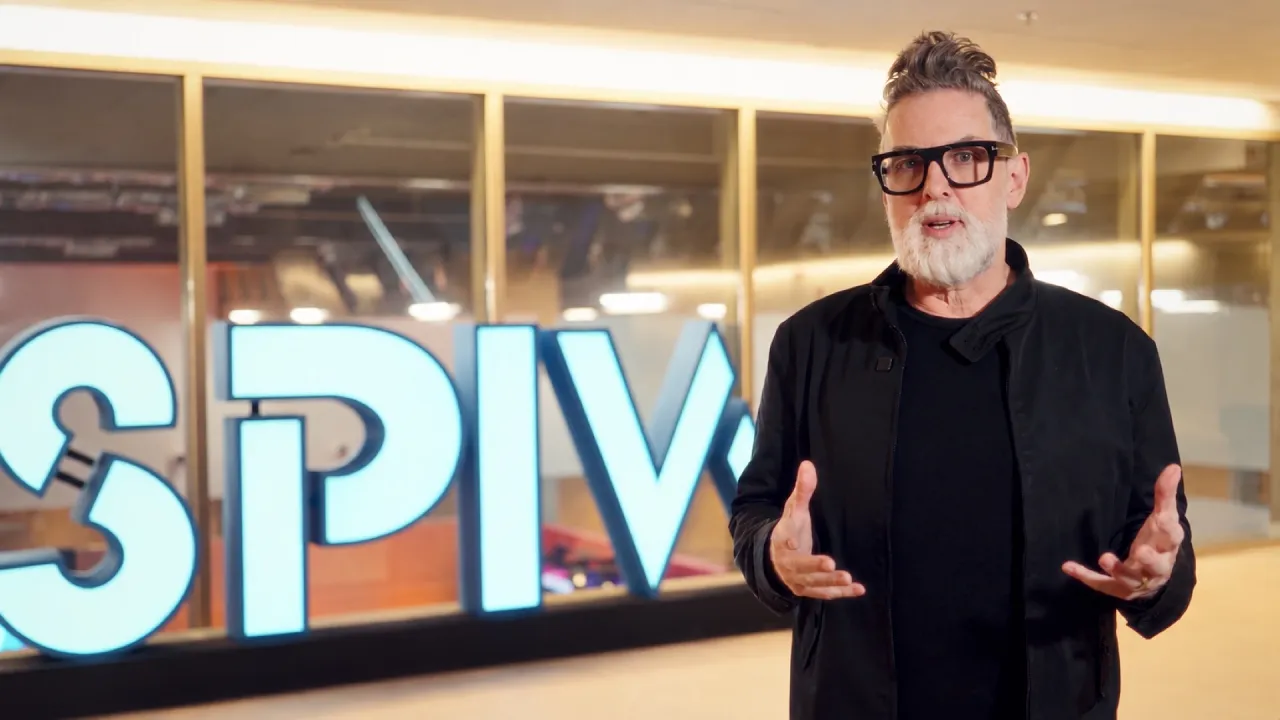
SPIW 2026 highlights
Neil at São Paulo Innovation Week 2026

SXSW 2026 summary
Neil's extensive SXSW 2026 participation.

Agentic AI Keyshop for Business Leaders
Neil leads an Agentic AI keyshop to 40 business leaders across diverse industries.

RD Summit 2025 Summary
Neil delivers the keynote at the largest marketing and sales event in LATAM.

Saúde Business Forum 2025 Summary
Neil delivers the opening keynote at the leading C-suite gathering in the Brazilian Healthcare industry, with many video testimonials.

Rio Innovation Week 2025 summary
Neil delivers the closing keynote as well as additional panels at Rio Innovation Week 2025, one of the largest innovation gatherings in the world.

AI Agents Keyshop for the C-Suite
Neil leads an Agentic AI keyshop (highly interactive, actionable keynote) for 20 C-levels across leading Brazilian and global companies.

Universo TOTVS 2025 summary
Summary of Neil's participation at the annual gathering of TOTVS, the technology company that powers 25% of Brazilian GDP.

SXSW 2025 summary
Highlights of Neil's SXSW 2025 activity
Recent events
ITForum CIO Summit 2026
Neil addresses the Top CIOs in Brazil
SPIW 2026 highlights
Neil at São Paulo Innovation Week 2026
SXSW 2026 summary
Neil's extensive SXSW 2026 participation.
Agentic AI Keyshop for Business Leaders
Neil leads an Agentic AI keyshop to 40 business leaders across diverse industries.
RD Summit 2025 Summary
Neil delivers the keynote at the largest marketing and sales event in LATAM.
Saúde Business Forum 2025 Summary
Neil delivers the opening keynote at the leading C-suite gathering in the Brazilian Healthcare industry, with many video testimonials.
Rio Innovation Week 2025 summary
Neil delivers the closing keynote as well as additional panels at Rio Innovation Week 2025, one of the largest innovation gatherings in the world.
AI Agents Keyshop for the C-Suite
Neil leads an Agentic AI keyshop (highly interactive, actionable keynote) for 20 C-levels across leading Brazilian and global companies.
Universo TOTVS 2025 summary
Summary of Neil's participation at the annual gathering of TOTVS, the technology company that powers 25% of Brazilian GDP.
SXSW 2025 summary
Highlights of Neil's SXSW 2025 activity